Rewardify
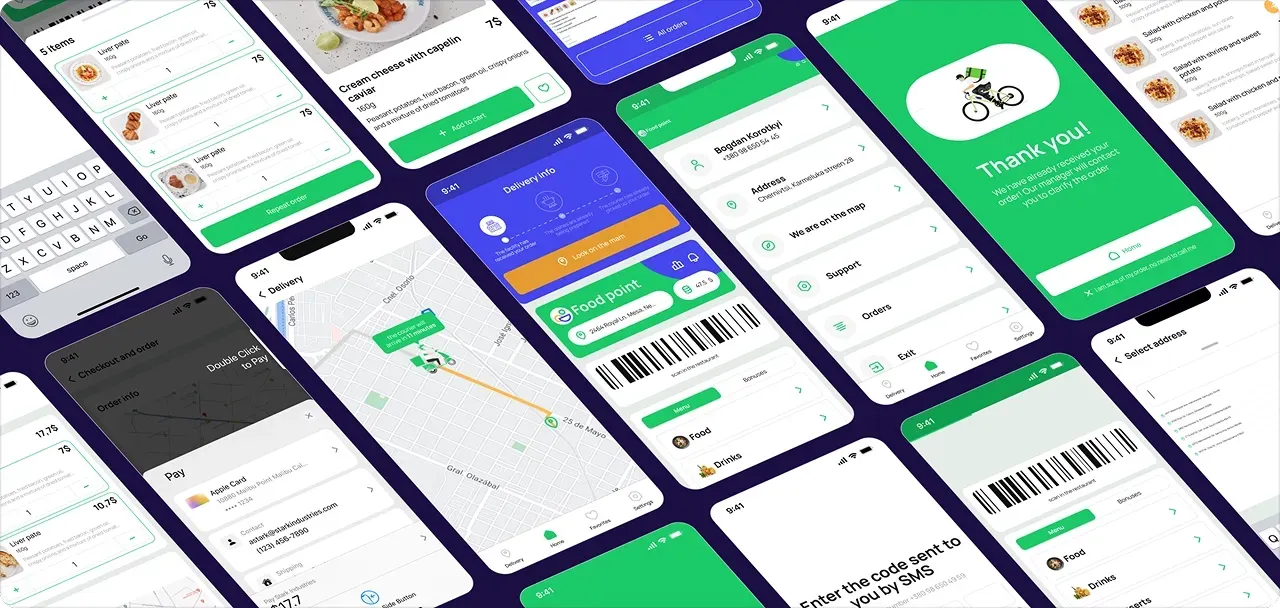
Rewardify — an all-in-one Horeca app that unifies loyalty, booking, ordering, inventory, and payments in one white-label platform.

Industries
Country

Canada
Services
What we did
HoReCa
·Booking System
·Inventory Management
·Real-Time Sync
·Offline Mode
·Loyalty Program
·Payments Integration
·Dual-database Architecture
Stack
React Native
·TypeScript
·Node.js
·PostgreSQL
·MongoDB
·Redis
Client
Rewardify is a Horeca technology product built for restaurant chains, hotels, and cafes that want to run their customer-facing and back-office operations from a single app. In one platform it combines a loyalty program (cashback, bonuses, referral rewards), table reservations, order management, inventory tracking, staff attendance, payment processing, and customer analytics.
Crucially, Rewardify is white-label: every chain gets its own branded app — logo, colors, typography — running on a shared codebase. The product's core promise is to let customers self-serve while businesses spend less staff time on manual coordination.
Key Highlights
One platform replaces 4+ separate tools — booking, POS, loyalty, and inventory in a single app.
~30% less staff workload — customers book, order, and pay themselves.
~20% more repeat visits — driven by the built-in loyalty program.
New client chain launched in 1 week — configuration only, no new development.
~$25K MVP budget, ~2-month build — full white-label Horeca platform.
Challenge
Horeca is a demanding, fast-moving operational environment, and the businesses Rewardify serves were running it on a patchwork of disconnected tools: a separate reservation widget, a separate POS for orders, spreadsheets or paper for inventory, and no loyalty program at all. Each tool worked — but none of them talked to each other.
The timing made this urgent. Post-pandemic, Horeca businesses faced labor shortages while guests began expecting contactless, self-service options as standard. A unified app covering loyalty, booking, ordering, and payments shifted from a nice-to-have to a competitive necessity.
The core problem: Horeca businesses had no unified digital platform connecting the guest experience with back-office operations. It surfaced in four ways:
- Fragmented tools — created double work and data-entry errors.
- No loyalty program — meant nothing brought guests back systematically.
- No analytics — made personalized offers impossible — businesses couldn't see what their customers actually wanted.
- Staff handled everything manually — bookings, orders, and payments — precisely when they were busiest.
In a restaurant chain owner's words:
We have three different systems: one for table reservations, another for orders, and we track inventory in Excel. Customers ask for a loyalty program, but we cannot afford more complexity. Our staff is overwhelmed during rush hours.
Reliability was a critical requirement. For a mid-sized chain, one hour of downtime during the lunch or dinner rush means lost reservations, orders, and loyalty engagement — an estimated $1,000–5,000 in lost sales, plus the damage to brand perception. The technical requirements were equally firm: integration with each chain's existing payment gateways, reservation systems, and POS; an offline mode that keeps working on poor internet; white-label branding without code changes per client; and reliable data synchronization between two different databases.
Solution
We built a unified, white-label platform on a hybrid database architecture: React Native for a single cross-platform mobile app, a Node.js backend, PostgreSQL for transactional integrity, and MongoDB for flexible loyalty rules and analytics. Build once, deploy to many chains through branding configurations.
Each architectural decision came from a concrete trade-off:
- Two databases instead of one. We first tried MongoDB for everything, including transactions — and it produced consistency issues that surfaced as double bookings. We moved transactional data (bookings, orders, payments) to PostgreSQL, which is designed for strict transactional consistency, and kept MongoDB for what it's genuinely better at: flexible loyalty configurations and analytics logs that change shape often. Change Data Capture keeps the MongoDB analytics views updated from PostgreSQL automatically.
- White-label theming instead of a separate app per client. Maintaining a forked codebase per chain would have made every update a multiplied cost. Instead we built a theming engine that reads each brand's configuration — colors, logos, fonts — at app startup, so a new chain launches without recompiling or branching the code.
- An adapter layer instead of point-to-point integrations. Every chain uses different payment, reservation, and POS providers. Rather than rewriting integrations per client, we built a layer that maps common operations — create booking, charge payment, update inventory — onto each provider's API through configuration.
- An offline queue instead of requiring a stable connection. Restaurants have dead zones and unreliable Wi-Fi. Orders placed offline are stored locally on the device and synchronized in the background once the connection returns, which minimizes the risk of losing an order to a dropped connection.
On top of this foundation sit the platform's key features: a configurable loyalty engine (cashback, bonuses, referrals), multi-warehouse addresses that show the nearest location with items actually in stock, a unified staff dashboard with real-time orders, reservations, and inventory, and customer analytics covering purchase history, favorite items, and predicted needs.
Process
- Domain and integration mapping. We mapped how Horeca chains actually operate across the tools they already use, and catalogued the payment, reservation, and POS providers the platform would need to support.
- Architecture validation. We prototyped the data layer, encountered consistency issues with a single NoSQL database early, and settled the PostgreSQL + MongoDB split before building features on top of it.
- Design. Our UI/UX designer built the interface for two distinct audiences at once: guests who want to book, order, and pay in a few taps, and staff who need real-time operational visibility.
- Build. A team of 1 Mobile engineer (React Native), 1 Backend (Node.js), 2 Database engineers, 1 Designer, and 1 PM delivered the MVP for the first client chain in ~4 months.
- White-label rollout. With the theming engine and adapter layer in place, onboarding each additional chain became a configuration task — roughly one week — rather than a development project.
Result
- A single app replaced 4+ separate systems — booking, POS, inventory, and loyalty unified.
- ~30% reduction in front-desk workload — an estimated $2,000–5,000 saved monthly per mid-sized chain.
- Repeat visits up ~20% — thanks to the loyalty program (the client reports up to 25% for their first chain).
- New chain onboarding in 1 week — (configuration only), versus 4 months for the original MVP build.
- 99.8% uptime — across production instances, with the offline queue reducing data loss during network drops and PostgreSQL replication (primary + replica) for high availability.
- Biweekly app releases through the App Store and Play Store.
In the users' words — a business owner:
We replaced 4 different systems with one app. Our staff no longer panic during rush hours – customers book tables, order, and pay themselves. And the loyalty program increased repeat visits by 25%. Finally we have real customer analytics.
A guest:
I can book a table, see the menu, order, and pay without waiting for a waiter. Plus I get cashback. Super convenient.
Technologies: React Native · TypeScript · Redux Toolkit · Node.js · Express · PostgreSQL · MongoDB · WatermelonDB · Prisma · TypeORM · Mongoose · JWT · Debezium (Change Data Capture) · Bull · Redis · White-label theming engine · Integration adapter layer.


Explore more case studies
Explore all
Have a product that needs to impress from the first second?
Premium look and speed don't have to compete. ZentixSoft builds sites that convey the full value of your product - and open instantly on any device.
